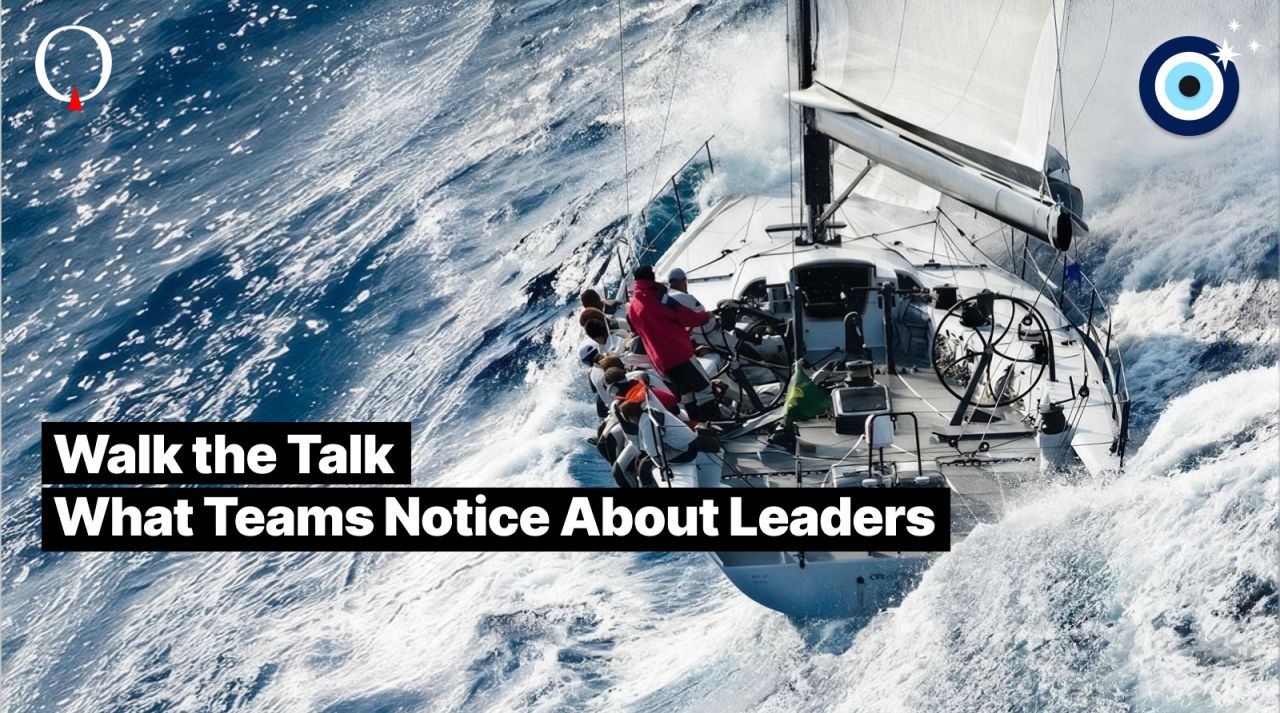
Your workers may or may not read your safety policy. But they do read your behaviour.
There is a moment, on almost every terminal floor, where employees decide what their company really believes about safety.
Employees hear a lot about their company’s view on safety. But when they really internalise how the organisation thinks, is one of the most influential moments.
It is not during onboarding. Or during the annual training. And it’s not on the day the policy is rolled out with great fanfare.
It is often the day they notice a senior leader spot something unsafe- and decide whether to walk past or stop.
Workers, almost without exception, trust behaviour far more than they trust policy. I have found that what they often notice and absorb, are not necessarily big a-ha moments.
• Does the supervisor wear his PPE the same way he asks me to wear mine?
• When she is running late, is it the safety briefing the manager chooses to skip?
• Does the leader who praised “stop-work culture” last quarter actually thank the worker who halted an unsafe lift last week?
• Does the GM still walk the floor, or only the boardroom?
Workers do not file reports about these moments. They just remember them. Internalise them. And pass them down. Years later, a new joiner is informally told over chai, what really happens when you raise an issue here. That story, and others like it, shape the real safety culture of the terminal.
Yet, a lot of safety culture problems are not necessarily ‘culture’ problems at all. They are modelling problems.
A leader who does not walk the talk dents their own credibility and slowly erodes everyone's.
No software can model integrity for you, and Qavach does not pretend otherwise. What it can do is make every safety behaviour, from the leader and the worker alike, visible and rewardable. So when someone on your team chooses to do the right thing, the system finally sees it.
Walk the talk, and your team will follow.
What is the safety behaviour your team most needs to see from leadership right now?