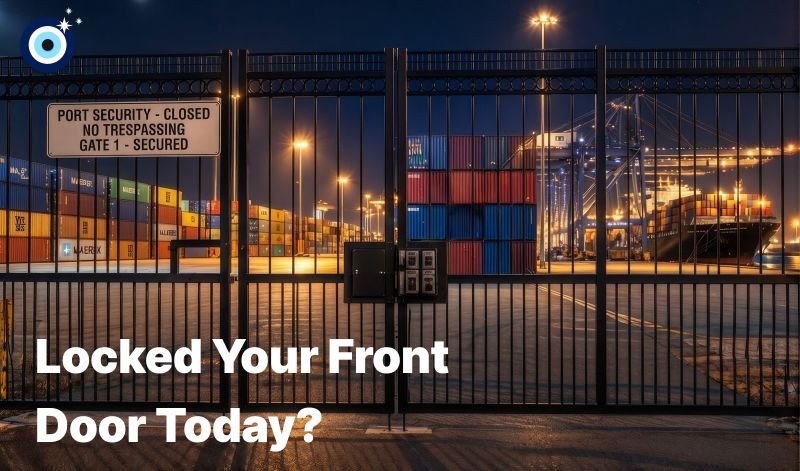
Most of us manage risk at home without overthinking it. We lock the door, we turn off the gas, we keep a child away from a hot stove.
The consequence is ours, and very real- so we feel it, we act on it. Instinctively.
The same instinct might not accompany us to a terminal. At least, not with the same intensity or care.
On a terminal, risk is spread across a team, a procedure, a shift. It is shared until it stops being any one person’s. At home, it might well be, “Oh no, I left the gas on!”. On the yard, the assumptions creep in- someone else would have seen it, or logged it, or will deal with it.
These assumptions are not trivial.
When a near-miss happens, is it clear who owns the follow-up? When someone spots an unsafe condition, do they feel immediately responsible for making sure it reaches the right eyes?
Does the follow up languish in a report for attention? Has the responsibility been spread so thin that each individual assumes it belongs to someone else?
The strongest safety cultures I’ve seen don’t tolerate this vagueness, they don’t permit assumptions. A hazard on the yard is owned as directly as an unlocked home.
But that ownership is harder to build than any procedure, because rules can’t simply ensure it.
It is part of what we are trying to support with Qavach. When an observation or a near-miss is reported, it’s directed to a specific person to act on, and the status of that action stays visible. Safety does not slide into a grey zone of everyone’s responsibility in general, and no one’s in particular’.
In our own lives, the ownership of risk is rarely in doubt. It is worth striving for the same clarity on the yard.


