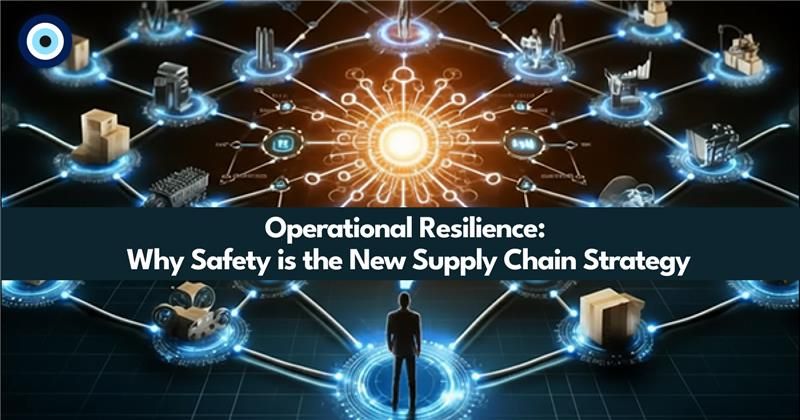
I’ve seen “minor” safety events trigger supply chain chaos across three continents.
One incident, and suddenly- throughput, vessel schedules, and reliability all take a hit.
And every time, the same truth appears: your supply chain is only as resilient as your safety operations.
Safety isn't about protecting people OR maintaining throughput.
It's about protecting people TO maintain throughput.
Yet, supply chain executives obsess over vessel schedules and container flows. They’ll optimise routes, containers, and vessel flows, but overlook the single factor that can stop all of it: a safety-related shutdown.
Smart terminals have started treating safety as a supply chain metric:
→ Mean time between safety-related shutdowns
→ Recovery speed from safety incidents
→ Preventive maintenance and uptime correlation
→ Real-time risk impact on vessel schedules
Data trends make the case. Terminals using predictive safety systems see up to:
→ 89% fewer unplanned operational interruptions
→ 60% faster incident recovery times
→ 45% improvement in schedule reliability
→ Zero customer diversions due to safety shutdowns
That’s not compliance. It’s continuity.
The new resilience formula is simple:
Predictive safety → Operational continuity → Customer confidence → Revenue protection
At Qavach, we reframe safety from a compliance cost into supply chain insurance.
Because the terminals winning tomorrow’s contracts will be the ones that never go offline unexpectedly.
How long were your operations down the last time safety failed?