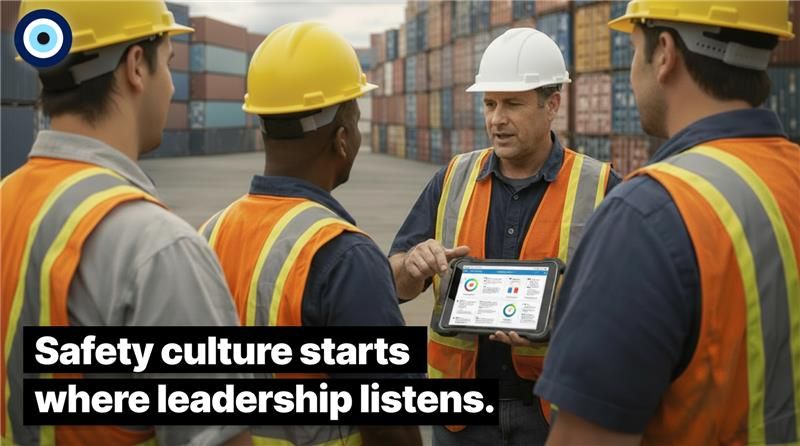
Terminal leaders tend to believe workers feel safe enough to speak up about hazards, and so they will always report them.
But workers often have a different view.
I believe the core issue is that when workers don't feel safe reporting unsafe conditions, near-misses go unreported. Problems escalate silently… and incidents become inevitable.
Terminals are high-risk environments. Production pressure can often override safety instincts. The gap between near-miss and fatality can often just be one shift. A shift where someone saw danger, but stayed quiet.
This is what culture should actually measure- will people speak up when they see risk, or stay quiet, avoiding consequences?
It is leadership that creates the permission to speak.
Stop-work authority is only effective when workers believe they have leadership supports.
Near-miss reporting only works if it isn’t followed with blame.
Contractor inclusion only works if speaking up is valued regardless of employment status.
With Qavach, we track signals that show whether workers actually feel safe speaking up. Reporting rates by shift, and team. Near-miss trends across departments. Action closure when concerns are raised.
These metrics reveal whether your culture encourages or silences the voices that prevent incidents.
Do your people genuinely feel safe to speak up about what they see?