How do you put a price on safety, especially when it’s mission-critical—like digitalizing safety operations at a container terminal? The risks are immense, and the consequences can be catastrophic.
Digitalization is the key enabler of a strong Safety Culture and a Zero-Incident terminal. It connects all essential safety components, ensuring proactive, data-driven decision-making.
A stretched HSE team relying on manual or semi-manual processes struggles to capture every infraction, let alone drive preventive safety measures.
Observations are often limited to near-misses, and only major incidents with severe consequences tend to get reported. This means a vast number of safety gaps—what we call “broken windows”—go unnoticed, uninvestigated, and unaddressed.
Few, if any, terminal leaders or HSE professionals would dispute that a powerful digital tool like Qavach could transform their safety effectiveness. A mobile app extends the reach of a small HSE team across the entire terminal, while system-driven data audits ensure that every event recorded is acted upon.
With Qavach, HSE teams can shift from reactive to preventive safety-enhancing Safety Walks, Toolbox Talks, HSE Initiatives, and other proactive safety measures that cultivate a true safety culture.
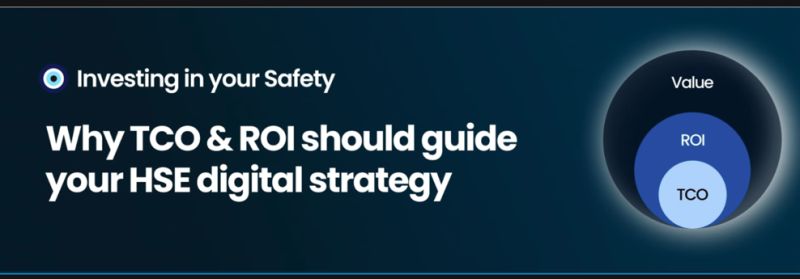
At Quantum BSO, we’ve developed an extensive Pain Point Register from our engagements with container terminals, mapping precisely how Qavach addresses specific challenges. Our Return-on-Investment (ROI) calculator shows striking results—just from process time saved.
When factoring in additional savings from LTI reduction, M&R costs, insurance, equipment downtime, and other safety inefficiencies, the financial impact is 5X or more in savings compared to costs.
Safety is priceless, yet the investment is just a fraction of the benefits.
If you're concerned about safety at your terminal or want to transform it into a Zero-Incident haven, let’s talk.
🔹 Test drive the Qavach
🔹 Use the Pain Point Register
🔹 Calculate your ROI and benefits
Make an informed decision—because when it comes to safety, there’s no room for compromise.