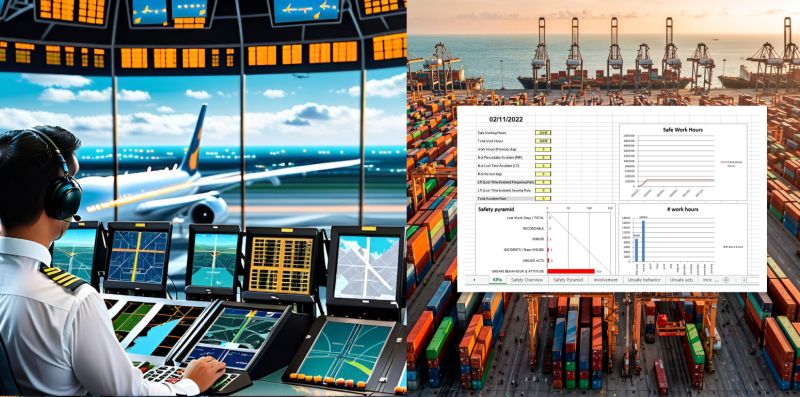
Every major disaster made aviation safer.
It learned. It adapted. It invested.
It embraced safety tech 20 years ago.
Ports?
We still file reports and hope it doesn’t happen again.
I've spent 20+ years watching this safety gap widen.
Aviation today:
→ Real-time monitoring of every component
→ Predictive maintenance before failures occur
→ Instant global sharing of safety insights
→ Zero-tolerance approach for ‘near-miss’ silence
Ports today:
→ Monthly equipment inspections (if we're lucky)
→ Reactive repairs, after breakdowns
→ Safety lessons trapped in individual terminals
→ Near-miss reports filed and forgotten
The result?
Aviation: 1 in 16 million chance of accident
Maritime terminals: 1 in 300 near-misses becomes serious incident
Both industries move people and cargo worth billions.
Both run on massive, complex machinery.
Both can't afford accidents.
But only one learned to prevent them – systematically.
Why the gap?
Aviation faced public scrutiny after every incident.
Ports operate behind closed gates.
Aviation had global regulatory pressure.
Ports have fragmented oversight.
Aviation invested in prevention technology.
Ports still treat it as optional.
At Qavach, we're closing that gap.
Real-time equipment monitoring.
Predictive failure alerts.
Instant incident response.
Cross-terminal learning.
Not just because it’s innovative-
because it's overdue.
Our terminals deserve the same safety standards as the planes that fly overhead.
The next evolution of safety won’t start in the air.
Let’s start it at our ports.