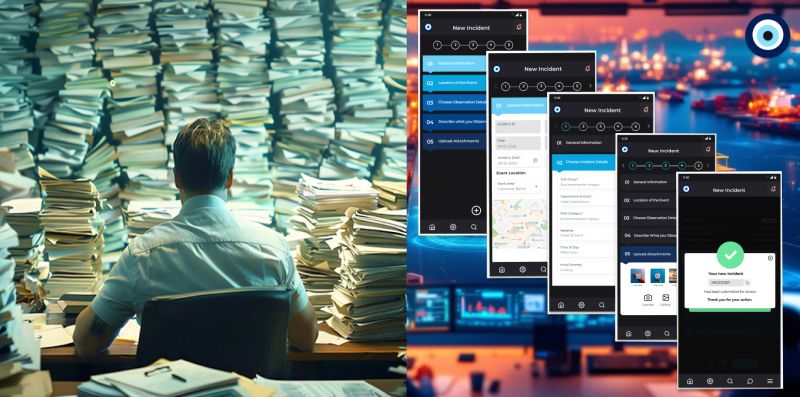
For years, filing an incident report within 72 hours was considered fast in container terminals.
Now, with Qavach, terminals do it in 7 minutes.
That difference matters more than you think.
Sample this ‘old’ flow:
▪️Worker witnesses near-miss - 2pm, Tuesday
▪️Supervisor gets verbal report - end of shift
▪️HSE officer starts paperwork - Wednesday morning
▪️Report submitted to authorities - Thursday afternoon
▪️72 hours of regulatory exposure
▪️72 hours of operational uncertainty
▪️72 hours for the same risk to repeat elsewhere
The new flow:
▪️Worker reports via MyQavach app - 2:07 PM
▪️System auto-categorizes severity instantly
▪️Photos and GPS location captured automatically
▪️HSE team alerted - 2:08 PM
▪️Preliminary report generated - 2:14 PM
▪️Total time - 7 minutes
This isn’t about speed for speed’s sake.
Speed buys you three things:
👉🏼Compliance. Regulatory compliance in real-time means no scrambling after audits.
👉🏼 Continuity. Operations keep running - no "incident investigation shutdown" delay.
👉🏼Prevention. Same-day pattern analysis stops repeat incidents across shifts.
Those 65 saved hours aren’t just time.
They’re the difference between proactive risk management and reactive damage control.
Your competition is still filling out forms while you're already preventing the next incident.
I've seen terminals get blindsided by regulators because their incident reporting was weeks behind reality.
Take an honest look - what's your current average time from incident to submitted report?