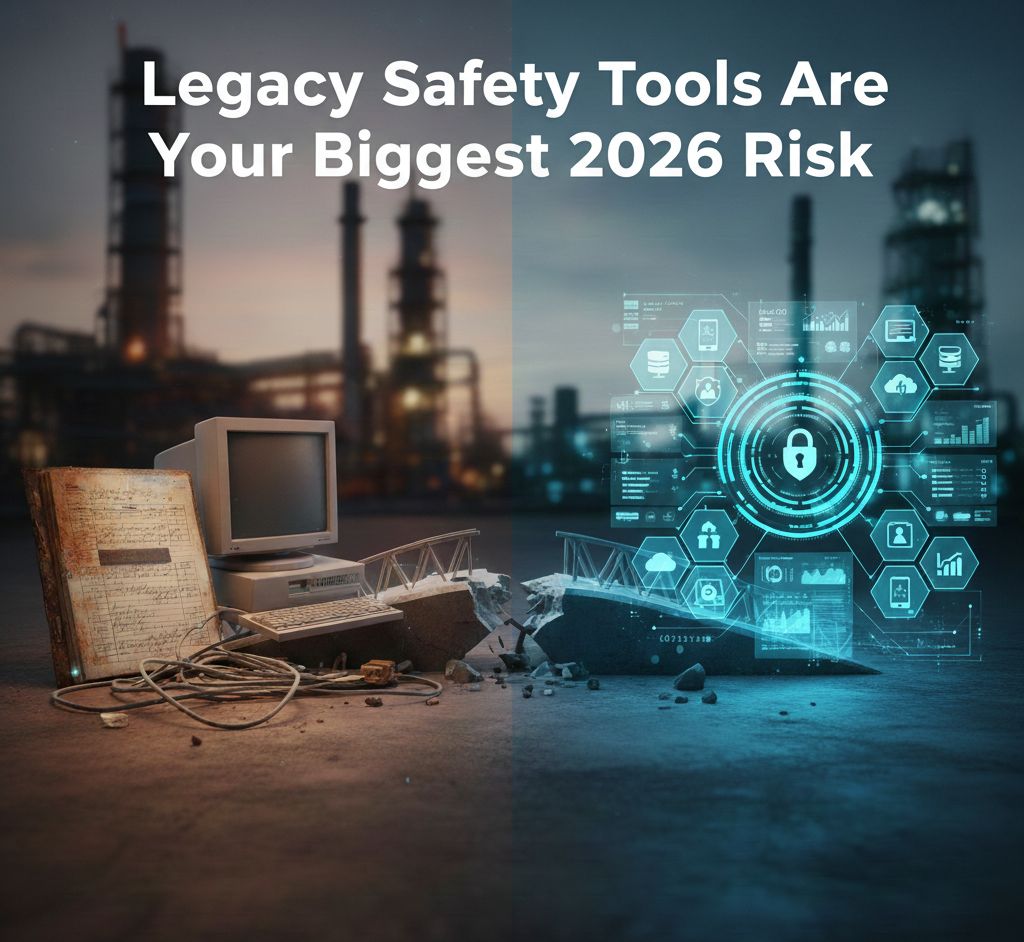
I’ve been reading the latest research on EHS digital transformation with some concern, particularly the Verdantix and Cority reports on what 2026 demands from safety systems.
There's no doubt that legacy EHS platforms served their purpose when periodic audits and manual reporting were sufficient. But where we see the disconnect- which can be a dangerous one - is that most enterprises still depend on these fragmented systems, while risk has fundamentally transformed.
The research confirms what many have suspected: regulators now expect real-time ESG data, cyber threats specifically target operational environments, and boards demand near-instant safety intelligence. Meanwhile, organizations run dozens to hundreds of disconnected EHS applications that create blind spots and fragmented incident data.
One cannot manage modern risk with tools designed for a different era.
Maybe most concerning, though, is that legacy platforms lack modern security controls and vendor support, making them prime targets for ransomware. When these systems fail, plants face extended downtime.
The solution isn't throwing everything away - that's neither practical nor necessary.
Forward-thinking organizations are adding a digital orchestration layer that connects existing tools while building modern capabilities.
Mobile-first capture supporting legacy systems.
Analytics that highlight leading indicators across sites.
Auditable trails for ESG reporting.
At Qavach, we've built exactly this - a layer that plugs into your existing systems, unifies your data, and delivers the real-time risk picture that 2026 demands.
I believe safety leadership means having the courage to modernize before a crisis forces your hand.
What's your organization's plan for bridging the gap between legacy tools and modern requirements?