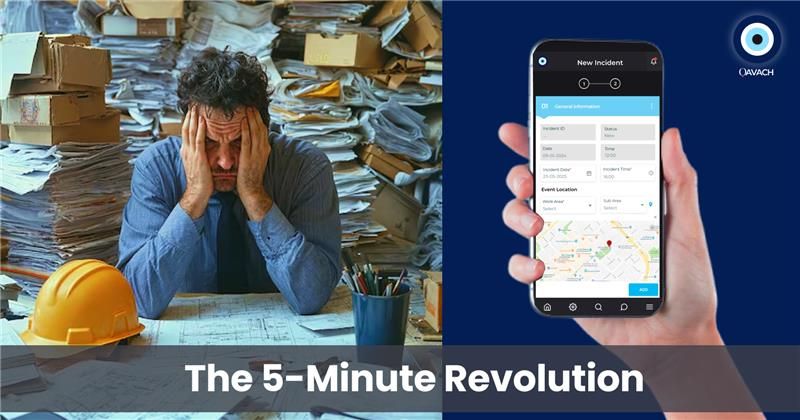
If your incident reports take 72 hours to reach the people who can act, your site is already three days behind the risk.
The reality at most terminals is more like this:
An operator spots a critical issue. A paper form is filled out. A supervisor validates it at the end of his shift. It reaches HSE the next day and takes action and conducts an inspection, perhaps the same day. Leadership likely sees an incident report three days later.
By then, nobody had connected the dots.
This was the fourth similar issue on that asset in two months.
The problem isn't people- frontline teams are working flat out.
The problem is the process: manual hand-offs, disconnected systems, and approvals trapped in email chains.
The problem is the lack of digitalisation and the missing Qavach
While manual work and paper climb slowly up the ladder, critical controls stay unchecked. Root causes get debated from memory. Warning signs only become obvious after multiple incidents. Action – both corrective and preventive is ad-hoc.
What if your terminal could move from report to action in less than 5 minutes?
That’s the design principle behind how we built Qavach.
• Minute 0-1: An operator logs the incident on mobile- photo, voice note, GPS, asset ID, contractor details.
• Minute 1-3: Automatic alerts reach the supervisor, HSE engineer, and control room.
• Minute 3-5: Tasks are assigned, the live incident view updates, and relevant history and checklists appear. Notifications are shared to all stakeholders.
Three things change.
▪️ Speed - moving from "reported yesterday" to "acted on now."
▪️ Intelligence - every activity carries context: asset history, contractor record, similar past incidents.
▪️ Reliability - standardized capture creates consistent records across all terminals.
The next incident is coming.
The question is whether you respond in a couple of minutes… or wait 72 hours to understand what happened.