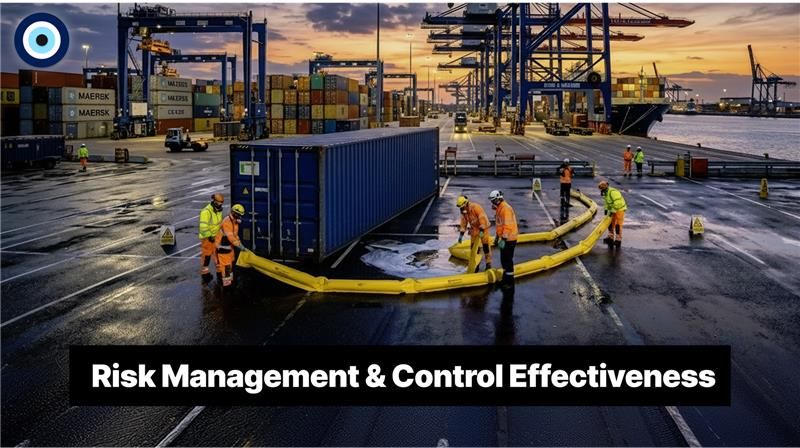
Most terminal operators I speak with have controls in place for almost every critical risk. That's not the problem.
The challenge is knowing whether those controls are actually working, on any given day.
I believe this is one of the industry's biggest blind spots.
We build controls- permits, inspections, procedures. Then we assume they're holding. But controls degrade- quietly, over time, out of sight.
Shifts run behind, and a permit gets rushed. An inspection happens on paper, because the team is stretched.
A barrier that worked perfectly last month gets bypassed this month, and nobody flags it because there's no system listening for that silence.
When incidents happen, investigations almost always point to the same thing- the control existed, but it wasn't verified.
Yet, what are most safety dashboards telling leadership? "What incidents have we had?", they list. The question that will help prevent the next one should be, "Are our controls effective and verified right now?"
This is where I believe predictive safety becomes so important. This is not a replacement for human judgement- I think of it as the visibility layer that makes the right questions answerable… *before* something goes wrong.
We apply this approach to Qavach, where hazard analytics, inspection trends, and control verification are brought into a single view. The pattern that typically precedes an incident becomes visible while there's still time to act on it.
Take a moment to consider- when did you last verify that your critical controls are actually working, not just that they exist on paper?