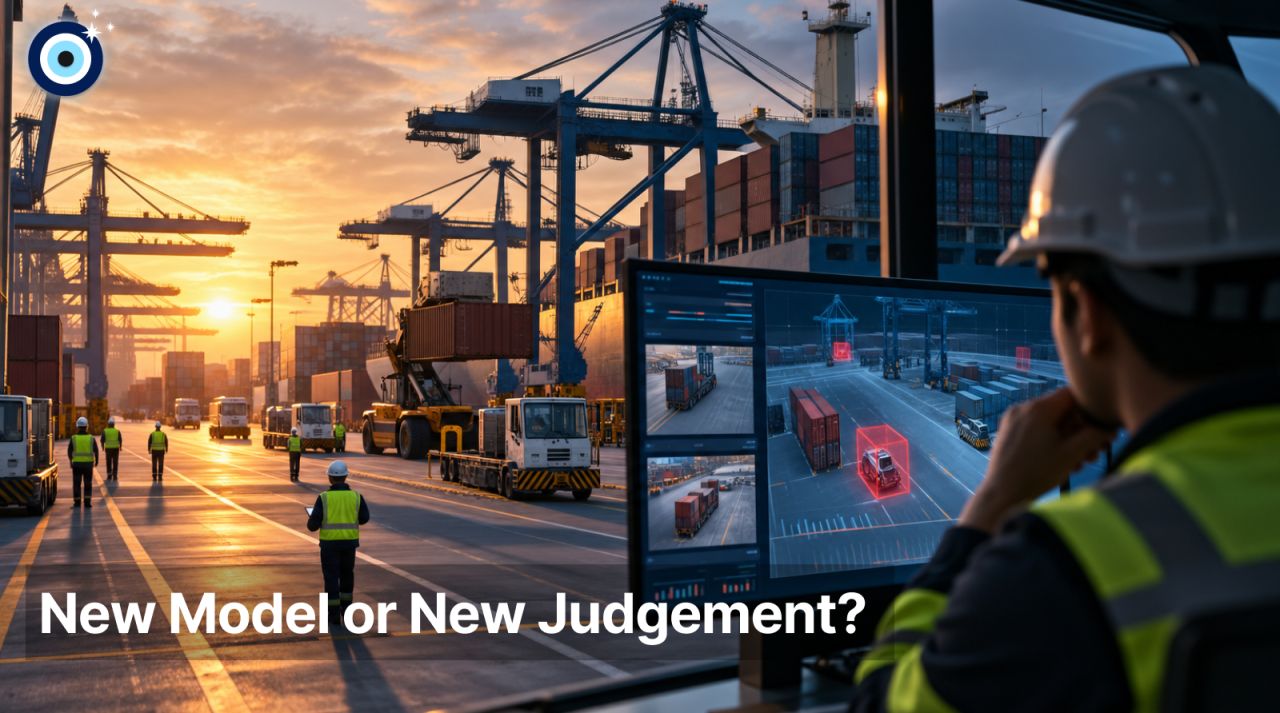
A terminal bought the capability. But didn’t see the change they hoped for. Sound familiar?
I have seen this pattern play out more than once. With great ambition, a terminal invests in a new model, a new detection engine, a new analytics layer. The demo was impressive, the procurement was signed off. A year goes by, but not very much changes on the ground.
In the growing disappointment, the instinct is to blame the technology. But I find that’s not necessarily where the gap is. The model might well work- it detects, it predicts, it produces the numbers. But without the supportive structure around it, it remains incomplete- the part that turns an output into a decision, and a decision into an action someone is accountable for.
Terminals often don’t have a model problem per se. They have a decision-structure problem:
• The system produces an alert, but there is no clarity whose job it is to act on it.
• A risk is flagged, without an agreed path from flag to intervention.
• Insight arrives, but plonks softly in a dashboard nobody owns. The shift moves on.
You can buy the most capable model on the market and still see no meaningful change, if the judgement around it has nowhere to sit.Capability is not the scarce thing in our industry. What’s rare is the ability to turn it into consistent, owned action.
This is the gap we set out to close with Qavach. Not to sell a sharper model in isolation, but to connect the capability to the decision structure around it. So what the system sees actually reaches the person who can act and becomes something done rather than something merely ‘noted’.
Before your next procurement, it may be worth asking the question that is harder than, “which model is the best”. Ask- what will actually change the day after you install it.


