Safety Walks. Most safety walks are visible. How many are effective?
The senior manager puts on a hard hat. Walks through a section. Makes observations. Nods at workers. Signs a clipboard. Leaves. The team goes back to doing exactly what they were doing before.
Weeks later, the same condition appears again.
The gap is not effort. It is structure.
This is what separates visible leadership from effective leadership. A safety walk only works when there is a system that captures observations, assigns clear ownership, and tracks actions to closure. Without that, leadership visibility does not translate into risk reduction.
This is why we built the ‘Safety Walk’ module in Qavach- to address this persistent gap.
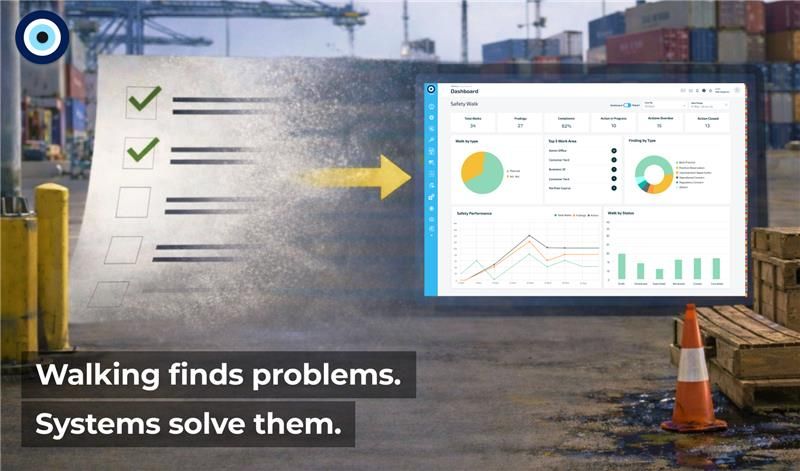
Safety Walks can be planned or ad hoc, assigned by route, area, or team. Structured checklists guide consistency across sites and teams. Configurable templates and personal task lists ensure nothing is missed. Observations, photos, and notes are captured in real time. Findings convert into corrective actions with defined ownership with escalation workflows.
Dashboards and trend views then show where unsafe conditions concentrate by area, shift, or department.
When you digitise the walk, you stop relying on memory and good intentions. You build data.
A safety walk should be more than a presence exercise. It should be a measurable safety program.
When was the last time a finding from your safety walk was tracked all the way to closure?